
What Does It Really Mean to Belong? Ι Sarah Tosh, HCLA Class of 2027
Our first HCLA class day focused on Diversity & Belonging, and I left with a notebook full of notes, underlined phrases, questions for myself, and (maybe most importantly) a few things I want to actually do differently.
We spent the day exploring diversity, equity, access, and inclusion from several different perspectives: unconscious bias, leadership and workplace culture, civility, accessibility, and the work happening right here in Hamilton County. The goal wasn’t simply to understand these concepts, but to think about the individual and institutional role we each play in creating belonging.
And that’s the piece I keep coming back to: our role.
Belonging doesn’t just happen.
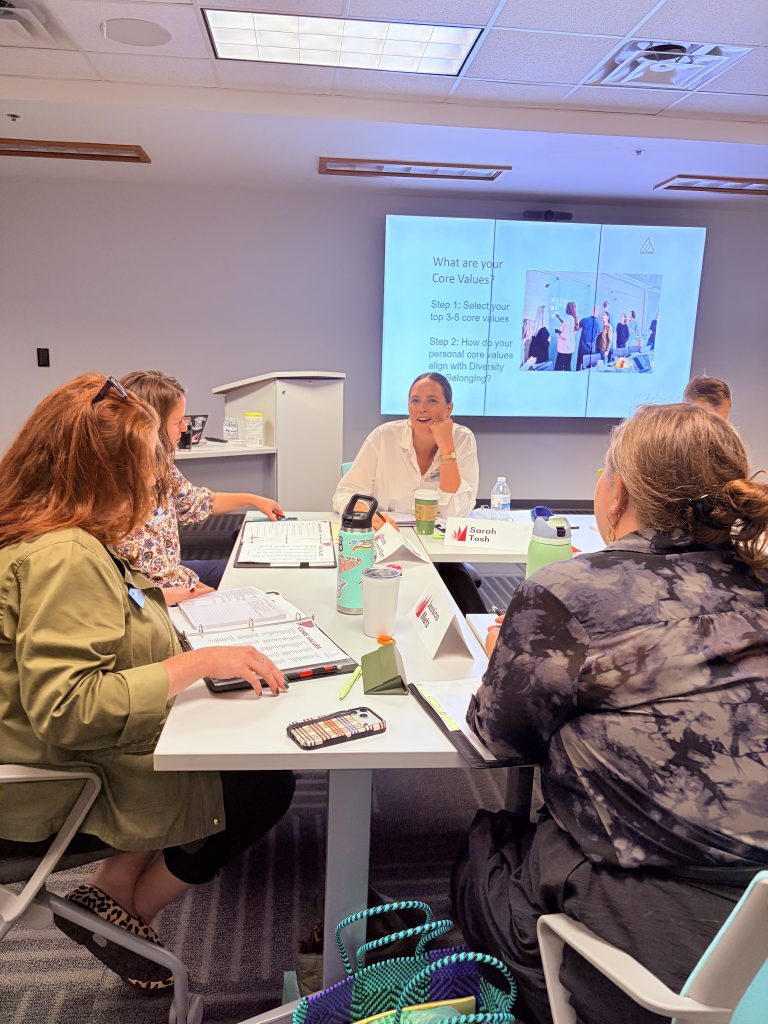 Early in the day, Andrew Adeniyi shared a framework that helped simplify four words we hear all the time:
-
- Diversity is the range of human differences.
- Equity recognizes that fairness isn’t always one-size-fits-all.
- Accessibility means designing systems so everyone has an opportunity to participate.
- Inclusion creates trust, respect, involvement, and empowerment where people feel valued.
But my favorite way of thinking about all of it was this: “Diversity is a fact. Equity is a choice. Inclusion is an action. Belonging is an outcome.” We don’t get to tell someone they belong. Their experience tells us whether we’ve created an environment where they actually feel like they do.
As someone thinking a lot about leadership right now, that hit home. How am I creating that feeling for the people around me? Am I recognizing people enough? Do they feel appreciated? Do they feel like their voice matters? Do they have what they need to be successful?
One question I wrote in big letters in my notebook was: “What do you need from me to be successful?” Simple question. But one I want to ask more often.
Get curious about your own perspective.
We also spent time talking about unconscious bias, which can feel uncomfortable because it requires acknowledging that we all have it.
One of my favorite exercises showed us images that could be interpreted in multiple ways. Same picture. Same information. Different people seeing completely different things.
Our experiences shape our perspective. They also create blind spots. Andrew’s challenge was not to pretend those biases don’t exist, but to recognize them, shine a flashlight on ourselves, practice “constructive uncertainty,” get feedback, and intentionally engage with people who are different from us.
Or, as another note in my notebook says: Listen to learn, not to respond or persuade.
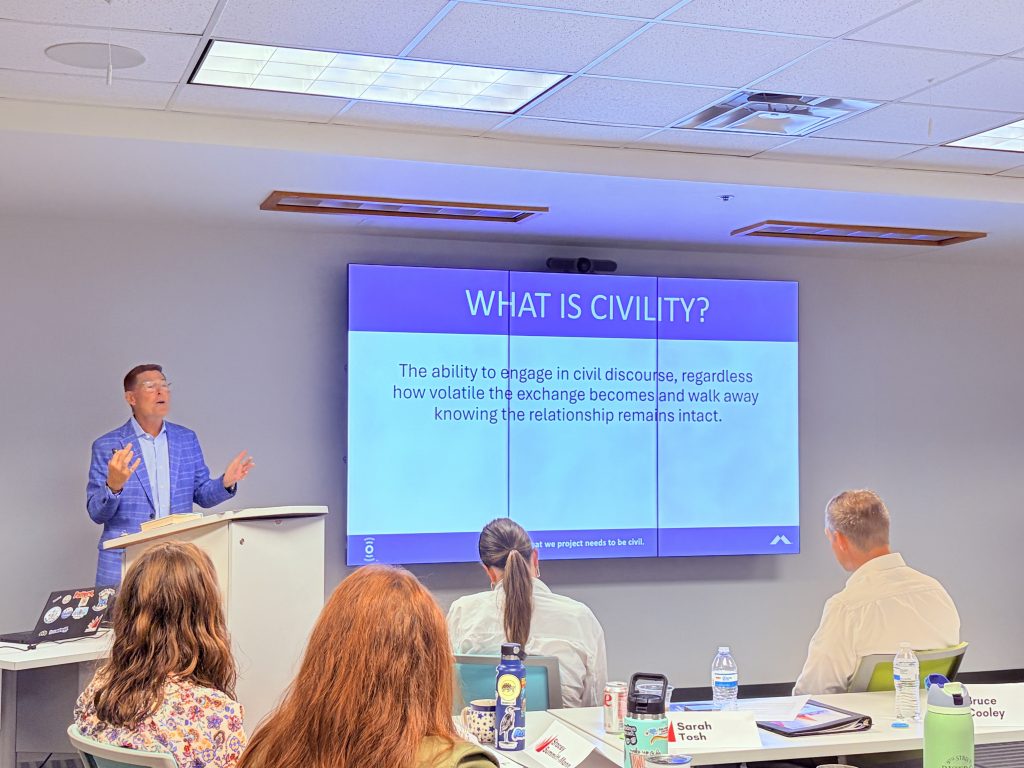 People are bigger than their opinions.
Jeff Worrell’s conversation about Project Civility took that idea one step further.
We practiced what happens when the goal of a conversation is to convince someone else that we’re right. Spoiler alert: not much listening happens.
Instead, Jeff challenged us to protect the human relationship even when we strongly disagree. His framework starts with goodwill, humility, and compassion: assume there may be genuine concerns behind someone’s position, acknowledge that you haven’t lived their life, and choose empathy over ego.
That doesn’t mean avoiding difficult conversations or watering down what we believe. One line I wrote down captured it perfectly: “Bring the heat. Just don’t burn the house down.” We can disagree. We can challenge each other. We can have hard conversations. And we can still remember that the person sitting across from us is bigger than one belief, opinion, or disagreement.
Design with more people in mind.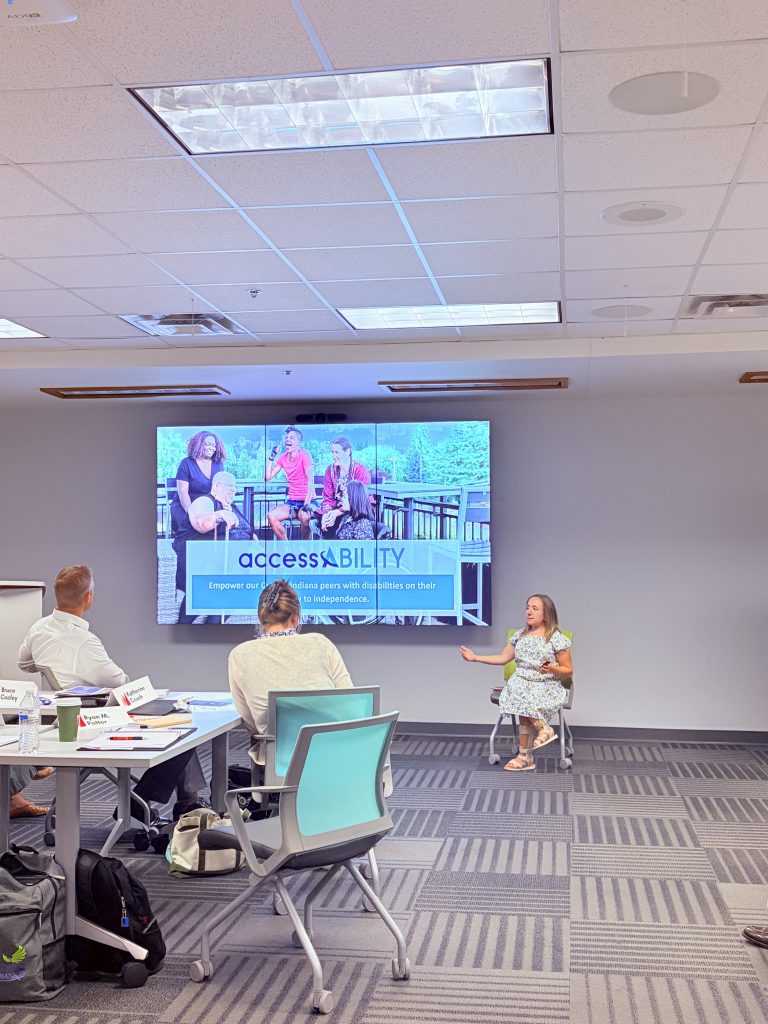
Jessica Minor’s conversation about accessibility challenged another assumption for me.
More than one in four Americans has a disability. And disability is incredibly broad – visible, invisible, physical, cognitive, temporary, permanent, and everything in between.
It made me think about accessibility differently. Instead of waiting for someone to tell us what doesn’t work for them, what if we designed environments with more people in mind from the beginning? As an event marketer, this one feels especially actionable. The physical room. The environment. The agenda. The food. The communication. The experience. Who might we unintentionally be making it harder for to participate?
That question applies far beyond events.
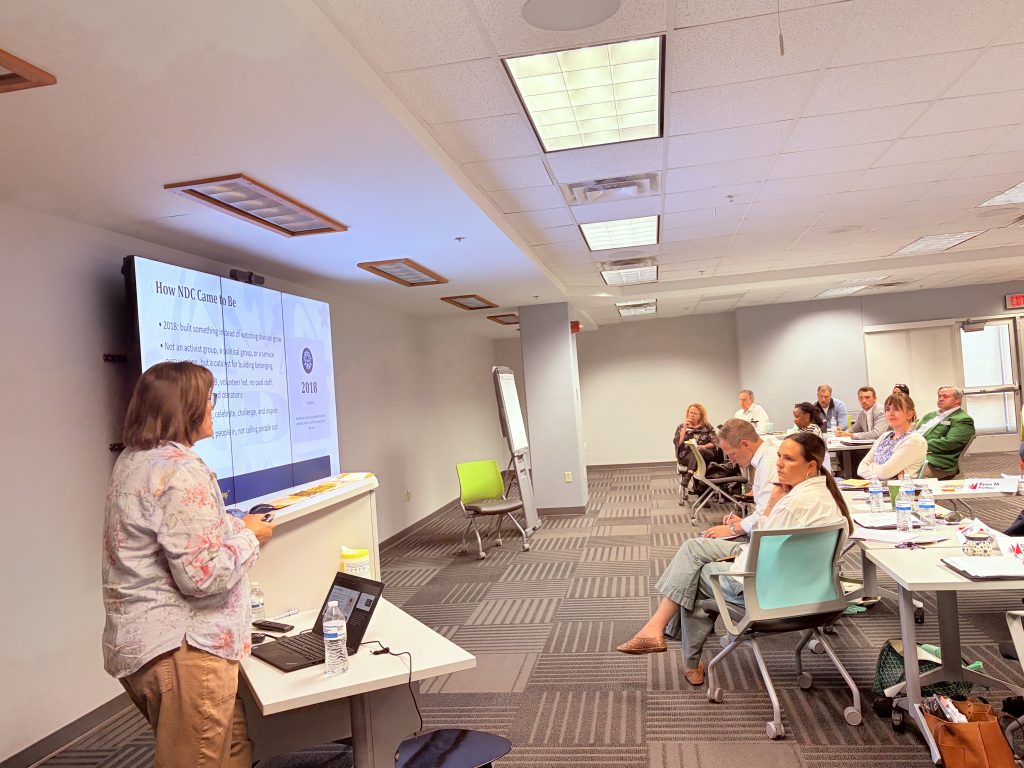 The daily moments matter most.
At the end of the day, Dana Randall shared the work of the Noblesville Diversity Coalition and talked about creating a more welcoming community right here in Hamilton County.
My biggest note from her session was probably the simplest: “The daily moments are what matter most.” That feels like the through-line of the entire day. Belonging is a huge concept, but building it doesn’t always require a huge initiative. It can be asking one more question. Listening a little longer. Recognizing someone who deserves to be recognized. Getting curious about a perspective you don’t understand. Designing something differently. Volunteering alongside your children. Inviting someone in. Choosing the relationship over the need to be right.
HCLA asks us not only to learn, but to put learning into action. So that’s what I’m taking with me from this class day. Belonging isn’t built through one big moment. It’s built through hundreds of small ones and we all have a role in creating them.