
Toni Holcombe, Class of 2027
It was 2002. Reality TV was mainstream, and American Idol made its debut. The fashion was questionable (and still haunts some of us today). Dial-up noises and busy tones were key sounds in the era of AOL Instant Messenger.
I had recently relocated to Indiana from Florida. From roller coasters and people dressed in character costumes to right, smack in the middle of soybean-then-corn farmland. Everything was so new, so foreign, and yet somewhat familiar.
I don’t remember the reason, but I recall needing to reach out to “Call Before You Dig.”
“What township are you in?” the voice on the other end of the phone asked.
“A what?” I asked, completely confused.
24 years later, I finally got an answer.
 What’s a Township?
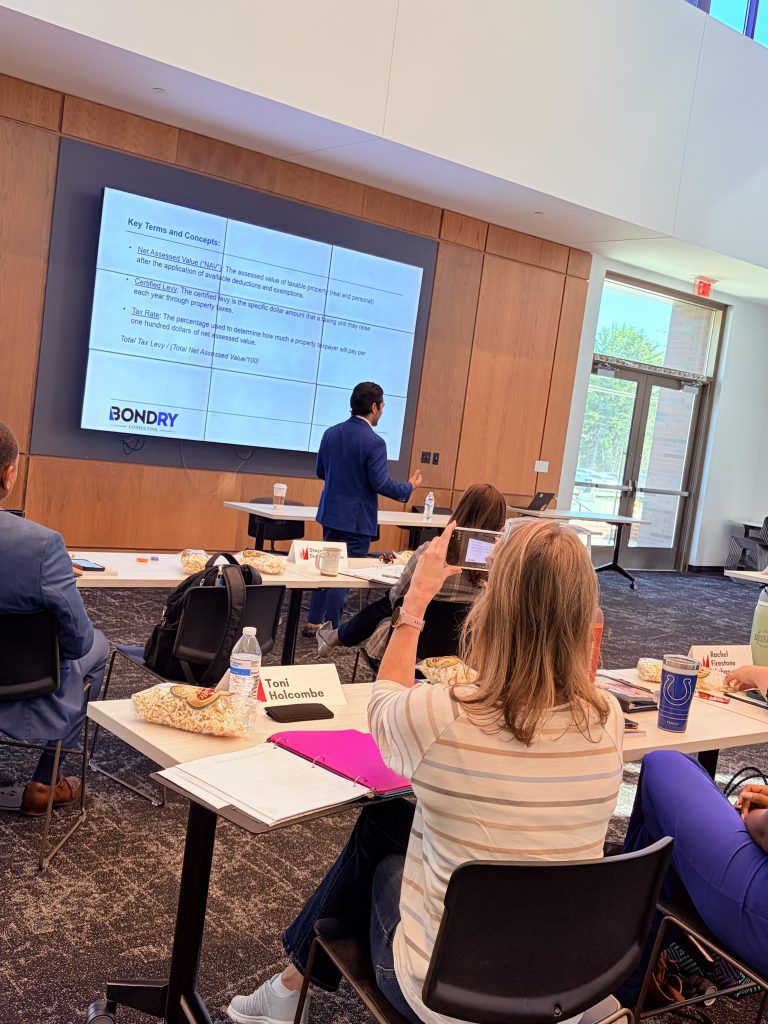
County & Municipal Government was the second class of Hamilton County Leadership Academy’s Signature Program, and that’s how I learned that a township is approximately 56 square miles, or about a day’s ride on a horse, and every township has a trustee. The trustee system is built as a form of highly localized “grassroots” government. Townships provide and manage a variety of services: emergency assistance, fire protection, cemetery maintenance, and sometimes trustees even have to navigate fence disputes.
We met at the Westfield Washington Public Library, which is also home to the township trustee’s office. Sharing public spaces like this is an efficient way to use tax dollars. It also puts assistance right where people already go.
At our opening retreat, I wrote down a few takeaways. Learn how the system works. Schools and the arts are paramount to the success of a community. Public transportation matters.
So it caught my attention when I learned that schools are the largest public transportation entity in Hamilton County.
I also learned:
- Community banks are the largest financial supporters of small local businesses. They are very much pro Main Street.
- Property taxes and local income taxes are the two major sources of revenue for local government. They work like a seesaw. Under SEA 1, property taxes are going down, and local governments now have more options to use income tax to make up the difference.
- There was once a “Drive at your own risk” warning sign on 116th Street.
- Local government has a more direct impact on its constituents than national government. And local government is actively inviting new strategic thinkers to the table.
Relationships Are the Common Thread
Before class started, I caught up with a few classmates. We chatted about our lives and built on the connections we started two months ago. These few minutes of relationship building are some of my favorite parts of this program. The relationships we are creating now are what I expect to carry with me long after graduation.
A number of speakers presented during the day, on topics from “Who Decides? Understanding Roles in Governmental Decision-Making” to the impact of SEA 1 to the role of townships in local government. We even had a Mock City Council Meeting (this was a lot of fun!).
And speaker after speaker came back to the same idea we started the program with: relationships.
Cities, townships, Hamilton County, and the state as a whole each have their own role. They don’t always agree (and sometimes debates even get a little loud), but they strive to cooperate and get along with civility, because none of this works without relationships.
The Value of Showing Up
I think a lot of people count themselves out too early. Maybe they see how elected officials get attacked on social media. Maybe they assume their own past would end up on display on a political flyer. Darren Peterson, Noblesville Common Council Member, spoke to the constant criticism he and other council members face. And despite what gets floated around on digital platforms, these people show up every single day. To serve. To guide. To listen. To make really hard decisions that impact their communities.
“Don’t Underestimate [the Value of] Your Testimony”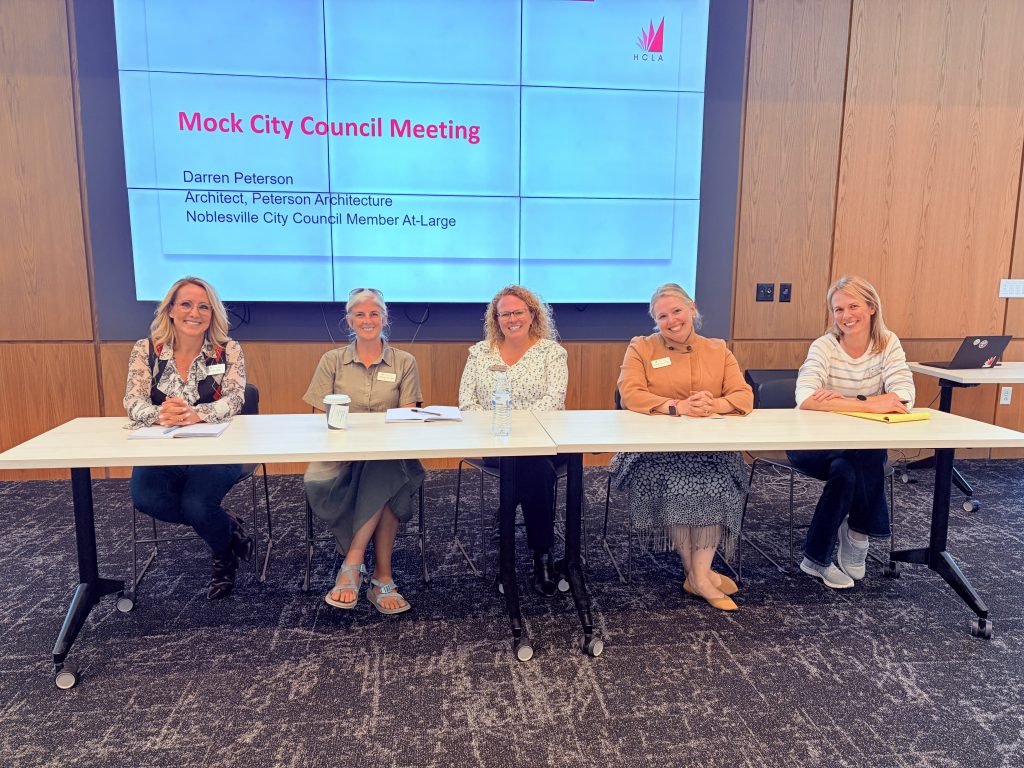
Public comment at a council meeting or testimony at the Statehouse carries more weight than most people think. When elected officials hear from the same voices again and again, the conversation and solutions may not evolve. A new voice with a real story stands out.
And some of the most important conversations happen in the hallway, before and after the meeting.
To anyone reading this post who is looking for a way to show up and get involved: asking an elected official to coffee is a low-risk ask. They want you to ask. The door is open. I know, because I stepped over the threshold.
To the people already in these rooms, my challenge is different. How do we find the people who want to get involved but don’t know how? Can we leverage more of the analog world to reach people where they already are?